
Air to water heater performance (SCOP) estimation
Having renovated our house recently we were wondering how to measure the performance of the whole system. In other words… basically… how to estimate the Coefficient of Performance (COP) or even better… the Seasonal Coefficient of Performance (SCOP).
In its simplest form, that COP is the ratio of the energy put into the system,  , to generate an amount of heat,
  :
:
![\[ COP = \frac{Q}{W} \]](https://www.vidi.dk/wp-content/ql-cache/quicklatex.com-a8b78684f280cbfa48adcb29c78f87ae_l3.png "Rendered by QuickLaTeX.com")
The SCOP describe the average COP during an average heating season. Yes… an AVERAGE heating season. So what is that?
Well, the need for heating is assumed to be depending on the outdoor temperature, as well as how well your house is isolated, basically. I’m completely aware of the fact, that this is an estimate, and that there may be losses from various parts of the system (pumps etc) that is not accounted for. But for a start and for the simplicity its acceptable.
First step is estimating the average need for heating, that is an equivalent of the outdoor temperature. Fortunately, The Danish Meteorological Institute’s (DMI) Open Data Application Programming Interface (API) provides free and open access to DMI’s data (link). Figure 1 show the temperature of a station close to “Home” (the red mark in Figure 1, right).
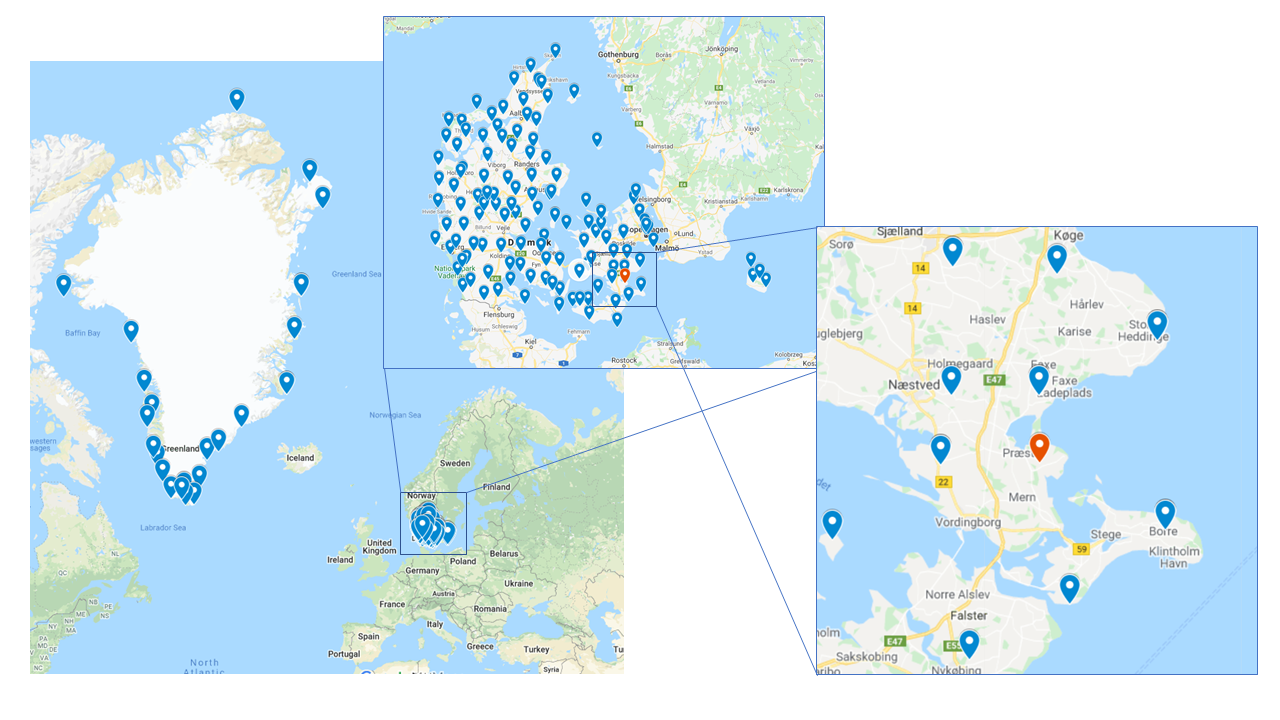 Figure 1: Stations available from the Danish Meteological Institute (DMI)
From the database one can make queries returning a JSON format “database”. Several types of meteological data can be acquired, among other temperature (hourly or 10 minute averages). From this one can create the below “frequency” (hourly) distribution. The station chosen started recording data in 2002, more or less continiously, up until this day. Hence the data contain more than 162.000 datapoints. Based on this the average temperature profile in Figure 2 can be found.
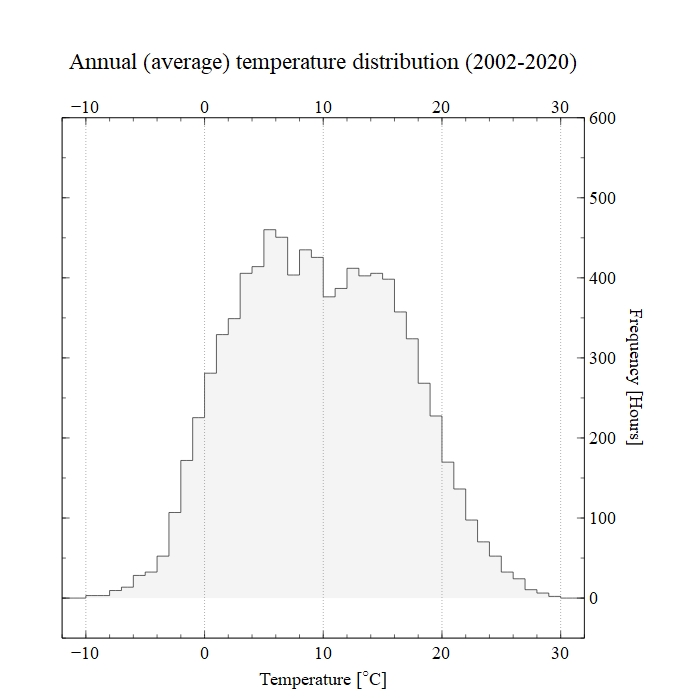
Figure 2: Temperature profile (hourly binned) averaged over approximately 2 decades
From the heatpump itself information of used and generated energy (kWh) is available. Recording this over time, will – when combined with the average temperature for the specific interval – give us the overlayed scatterplot shown in Figure 3. This plot illustrate the relationship between used and generated (required) energy per square meter per hour at a given temperature, and the average amount of hours per year at a given temperature. The latter will – of course – depend on the region, and hence vary from case to case.
The figure also show the regression line for the two sets of points. Although, a nonlinear (e.g. exponential or other) relationship may seem more reasonable.
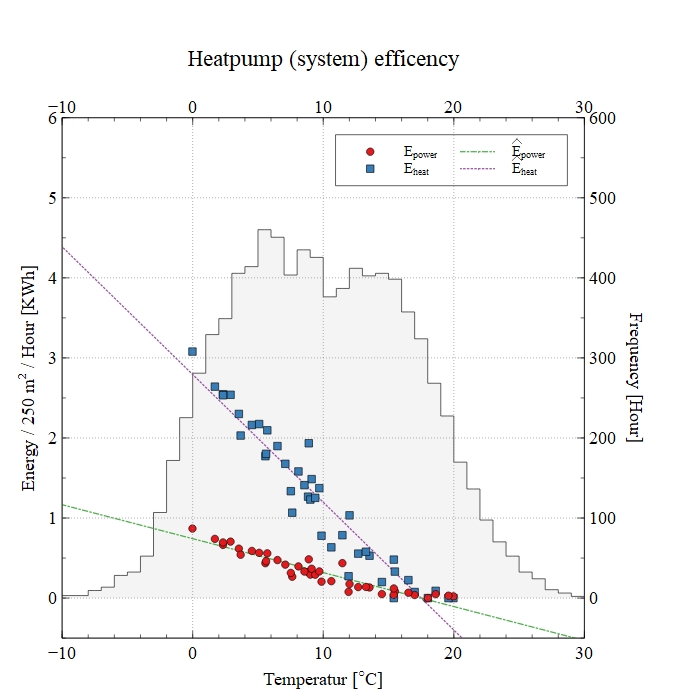
Figure 3: Complete overlay of charts. The outdoos temperature distribution, together with the heating/energy
needed and the energy required to create that amount of heating/energy.
“Projecting” the the estimated functions on to the distribution gives us and , and the SCOP can be estimated by division (SCOP  4.0). If a linear relationship is assumed, the ratio between the slopes yield same result.
0 Comments